

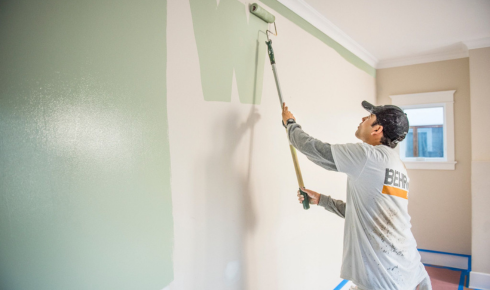
Open layouts and multi-use rooms are common now—one space doing duty as living, dining, work and play area. Two-tone wall colours are a gentle way to define zones without building walls.
One approach is to keep a light neutral shade as the main colour and use a slightly deeper or different tone to mark a specific zone—like behind the sofa, around a desk corner, or near the dining table.
Horizontal two-tone walls, where the lower part is darker and the upper part lighter, can ground a room while keeping it bright. This also hides scuffs and marks better at the bottom where they usually happen.
You don’t need bold contrast. Even small shifts—from off-white to beige, from pale grey to muted blue—are enough to visually separate areas while keeping the room feeling cohesive.
Combine paint differences with rugs and lighting to reinforce those zones. The goal is not to shout “different area here!”, but to gently guide the eye and create a sense of structure.
